
DOWNHILL BIKING Tricks, Tailwhips, Flips, and Grinds
Style the descent without throwing away sector gold—timing, airtime, and smart risk.
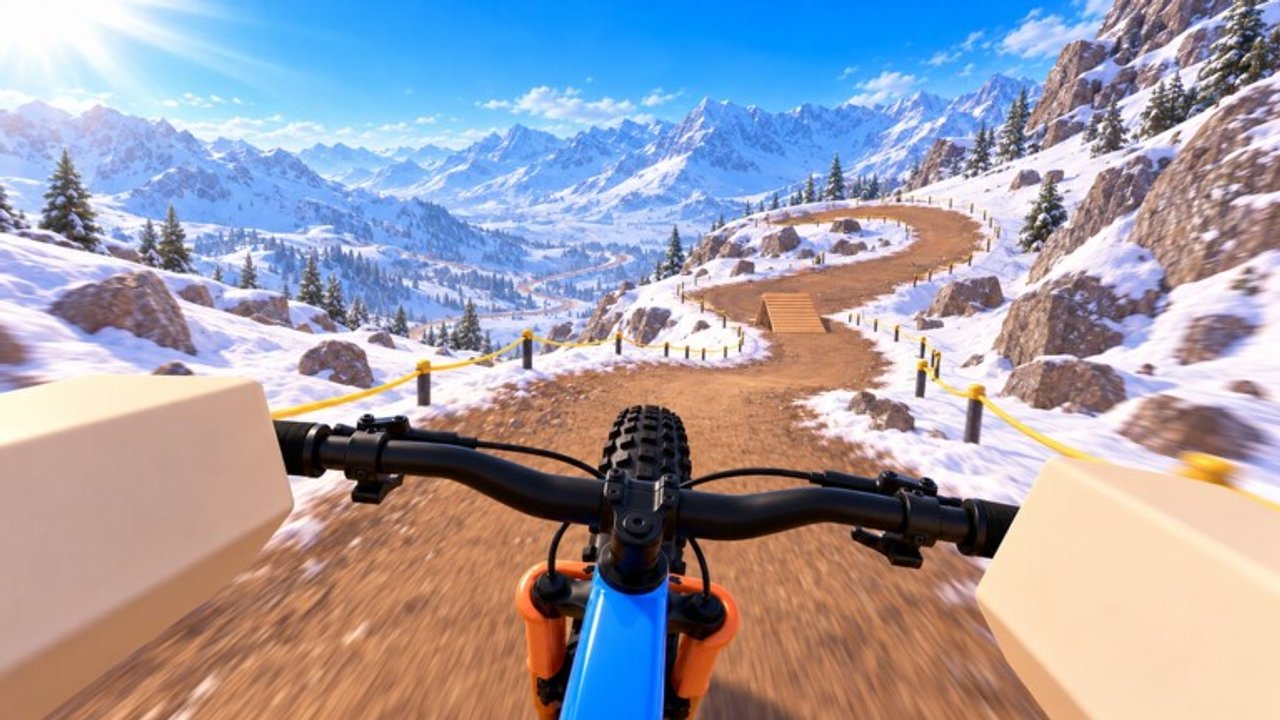
Tricks are the swagger layer of DOWNHILL BIKING. The official pitch calls out jumps, tailwhips, flips, and rail grinds while you chase best times down the mountain. Style makes sessions memorable and can separate skilled riders in crowded servers—but medals unlock the mountain, and wipeouts still happen when rotations run long. This guide teaches a progression from clean airs to confident combos, then explains when to put the circus away and race a sterile gold line.
Trick philosophy: airtime budget
Every jump gives you a limited airtime budget. A trick must start, display, and finish inside that budget with a margin for landing corrections. If a tailwhip needs most of the airtime, you cannot also flip. If a flip needs most of the airtime, you cannot also set up a late rail. Beginners fail by starting the flashiest move on the smallest lip. Experts succeed by matching move size to jump size.
Build a personal ranking of jumps on your current sector: S-tier (huge, forgiving), A-tier (enough for one solid trick), B-tier (straight air only), and trap jumps (look cool, punish greed). Only S and A jumps earn tricks during medal attempts.
Jump timing before any spin
Confirmed: sending jumps matters. Technique checklist:
- Square the bike to the lip.
- Carry the speed the jump was built for—use braking habits from the controls guide.
- Leave the lip with the camera already hunting the landing.
- Decide the trick in the first third of the air, not the last third.
- Neutralize inputs before the tires touch so the suspension (or Roblox equivalent settle) is not fighting a mid-rotation.
If you cannot land straight airs ten times in a row on a jump, you are not ready to trick it.
Tailwhips
Tailwhips are called out by name in the official description, so expect them as a core stylish move. Conceptually, the frame rotates around while you track the landing. Practical tips that transfer across MTB-style games:
- Start the whip as soon as you are clear of the lip.
- Keep eyes on the dirt, not on the spinning frame.
- Prefer single whips until the animation reliably completes early.
- On narrow landings, skip the whip; a clean wheelie-free landing beats a stylish crash.
Use tailwhips as your default “I have free airtime” trick. They teach rotational timing that later helps flips.
Flips
Flips demand more airtime and punish late commits. Treat them as A/S-jump exclusives. Common failure modes:
- Under-rotation: wheels hit sideways or inverted → wipeout → bone payout, but medal ruined.
- Over-commit on small lips: you started a flip that the jump cannot finish.
- Camera panic: looking at the sky instead of the landing.
Drill flips on the biggest safe jump of a low sector until ten consecutive landings stick. Only then bring flips into higher mountain sectors where speed and consequences rise.
Grind rails as trick connectors
Rails are confirmed. A grind can be:
- Pure style after an air.
- A line tool that carries speed along a sparse section.
- A trap that ends in a wall or drop you are not ready for.
Approach rails parallel, match height with a small hop if needed, and exit before the terminus. Chaining jump → whip → grind looks great in freestyle runs. On gold medal attempts, take the rail only if it is faster or equal in risk to the dirt line you already know. Detailed sector strategy sits in sectors and medals.
Watch a live downhill session mid-article to see how jump size, trick choice, and recovery look at full speed. Pause on landings: notice how finished rotations look versus panicked corrections.
Style runs versus medal runs
Split your brain into two modes.
Style session goals
- Max unique tricks landed.
- Practice flip on S-jumps.
- Experiment with optional rails.
- Accept wipeouts as paid practice (broken-bone cash still helps the bike and crate economy).
Medal session goals
- Repeat one known line.
- Trick only when it does not endanger the landing.
- Skip experimental rails.
- Abort a messy aerial early—tuck and survive.
Players who mix modes mid-run usually earn neither clean clips nor gold. Finish the medal, then freestyle the victory lap.
Risk ladder (learn in this order)
- Straight air.
- Tailwhip on A-jumps.
- Safe grind without a prior trick.
- Whip into easy grind.
- Flip on S-jumps only.
- Flip variants or longer combos after golds feel easy.
Skip steps and the mountain will collect tuition in wipeouts.
Reading other riders
Shared servers mean traffic. Do not start a slow flip if someone is landing on your lip. Yield the feature, take a B-line, and keep your time alive. Collisions into another bike often look like “the game glitched” when it was avoidable greed.
Bike choice and tricks
Dirt jumpers often feel lively for learning pop and recovery; high-end bikes can feel planted at speed. Cosmetics from wraps, wheels, and tires do not replace timing, but a bike you trust encourages cleaner commits. When you unlock options, compare them with the bike tier list and the collection guide rather than assuming the rarest frame auto-lands flips.
Fifteen-minute trick warm-up
- Five straight airs on your favorite jump.
- Ten single tailwhips, aborting any late start.
- Five rail entries without tricks.
- Three whip-to-grind attempts on the safest rail.
- Two flip attempts on the biggest lip only.
- One full sector at medal pace with tricks limited to auto-safe airs.
Linking tricks to the rest of the wiki
New players should still finish getting started and redeem codes before obsessing over combos. Controls fluency prevents “I pressed trick and exploded” moments. Sector golds expand the playground where advanced tricks matter. Collection and crates keep the bike looking like the clips you want to take.
Tricks are optional spice on a skill sandwich whose main ingredient is a repeatable downhill line. Master the budget of each jump, respect flips, use rails with intent, and you will style hard without stalling mountain progress.
Frequently Asked Questions
Quick answers for DOWNHILL BIKING riders.
Which trick should I learn first?
Land straight airs first, then single tailwhips on medium or large jumps. Add flips only when those landings are consistent.
Should I trick during gold medal attempts?
Only when the move finishes early on a jump you trust. If a trick risks a wipeout, skip it until the sector gold is unlocked.
Are rail grinds required?
No. Rails are a confirmed feature for style or line choice, but optional if they cause frequent crashes on your current skill level.
Why do I keep under-rotating flips?
The jump is too small or you started too late. Move to a bigger lip, start the flip earlier, and keep the camera on the landing.
Do wipeouts while tricking still pay?
Yes. Wipeouts can pay cash for broken bones, so practice sessions still feed your bike and crate funds even when a flip fails.